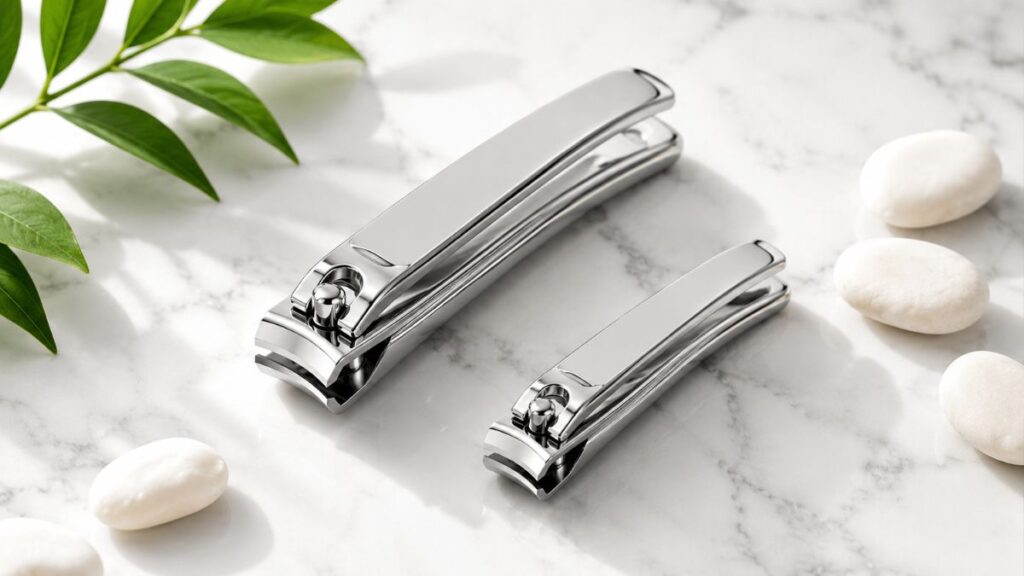
If you’ve ever winced while trimming your nails — or ended up with a jagged edge that caught on everything — there’s a good chance your clippers just aren’t up to the job. Switching to professional nail clippers can make a surprisingly dramatic difference. Whether you’re maintaining your own nails at home or stepping up your self-care routine, the right pair of clippers is one of those small investments that pays off every single week.
But with dozens of options out there, how do you actually choose? Let’s walk through everything you need to know.
What Makes a Nail Clipper “Professional”?
The word “professional” gets thrown around a lot, but in the context of nail clippers, it has a pretty specific meaning. A professional-grade clipper is built to deliver clean, precise cuts with minimal effort and maximum durability. Here’s what sets them apart from the basic clippers you’d find in a travel kit:
- High-grade stainless steel blades — Harder, sharper, and rust-resistant
- Tight blade alignment — Reduces tearing and produces smooth cuts
- Ergonomic lever design — Requires less hand pressure to close
- Heavier construction — More control, especially on thick nails
- Long-lasting sharpness — Holds an edge far longer than cheap alternatives
Think of it this way: a budget nail clipper is like cutting fabric with kitchen scissors. It works, but it’s never quite right. A professional tool is designed specifically for the job.
Key Quality Indicators to Check Before You Buy
| Feature | Budget Clippers | Professional Clippers |
|---|---|---|
| Blade Material | Carbon steel or alloy | Surgical-grade stainless steel |
| Blade Alignment | Often misaligned | Precisely fitted, tight tolerance |
| Cut Type | Crushing/tearing | Clean, single-stroke cut |
| Handle Comfort | Thin, slippery | Textured, ergonomic grip |
| Durability | 6–18 months | 5–10+ years with care |
| Nail File Included | Thin metal strip | High-grit or dual-sided |
Types of Professional Nail Clippers
Not all professional clippers are built for the same purpose. Knowing which type fits your needs will save you a lot of frustration.
Straight-Edge Clippers
These have a flat, linear blade ideal for toenails. They help prevent ingrown nails by cutting straight across rather than following the curve of the nail. Podiatrists commonly recommend this style for toe care.
Curved-Edge Clippers
Curved blades mirror the natural arc of fingernails, making them the go-to for fingernail maintenance. The curved cut follows the contour of your finger naturally.
Heavy-Duty Clippers
Designed for thick nails — whether from age, genetics, or fungal issues — heavy-duty models use reinforced blades and longer lever arms to give you the mechanical advantage needed to cut cleanly without splintering.
Foldable and Travel Clippers
Some professional brands offer compact, folding designs that maintain quality while staying portable. Great for travelers who don’t want to sacrifice performance.
Professional Nail Clipper Comparison by Use Case
| Clipper Type | Best For | Blade Shape | Recommended For |
|---|---|---|---|
| Straight-Edge | Toenails | Flat | Adults with thick or ingrown nails |
| Curved-Edge | Fingernails | Arched | General everyday use |
| Heavy-Duty | Thick nails | Flat/reinforced | Seniors, athletes, nail disorders |
| Foldable Travel | On-the-go grooming | Varies | Frequent travelers |
| Precision/Micro | Detail trimming | Fine-tipped | Hangnails, small nails |
How to Use and Maintain Your Nail Clippers
Even the best clippers won’t perform well if you’re not using them correctly — or if you neglect them after every use.
The Right Way to Clip
- Soften your nails first. Clip after a shower or soak your nails in warm water for a few minutes. Softened nails cut more cleanly and are less likely to split.
- Clip in sections. For thicker nails, make two or three smaller clips rather than one large squeeze.
- Follow the natural curve. For fingernails, clip the sides first, then trim the center.
- Don’t cut too short. Leave a small white edge — cutting too close risks pain and infection.
- Finish with a file. Smooth any rough edges to prevent snagging.
How to Keep Your Clippers in Peak Condition
- Clean after every use — Wipe blades with a dry cloth or rubbing alcohol
- Store in a dry case — Moisture leads to rust, even on stainless steel
- Oil occasionally — A tiny drop of mineral oil on the blade pivot keeps the action smooth
- Sharpen when dull — A leather strop or professional sharpening service extends blade life
- Replace when needed — Even the best clippers eventually wear out; a dull blade is a safety risk
Pros and Cons of Professional Nail Clippers
Pros
- Cleaner cuts — Eliminates splitting, tearing, and uneven edges
- More durable — A good pair can last a decade or more
- Less hand strain — Better leverage means less grip force needed
- Hygienic materials — Stainless steel resists bacteria and is easy to sterilize
- Better for nail health — Clean cuts reduce the chance of ingrown nails and breakage
Cons
- Higher upfront cost — Quality clippers typically run $15–$60 versus $2–$5 for basic versions
- Overkill for some users — If you have thin, soft nails that clip easily, a premium pair may offer minimal noticeable difference
- Heavier weight — Some prefer lighter clippers, especially for travel
- Requires proper maintenance — Unlike disposable clippers, quality tools need occasional care to stay sharp
Common Mistakes People Make With Nail Clippers
It’s surprisingly easy to misuse even the best tools. Here are the mistakes that most people don’t realize they’re making:
Clipping dry nails. Hard, dry nails are more likely to crack or splinter during clipping. Always clip after bathing or soaking.
Using the wrong clipper for the job. Trimming toenails with a curved fingernail clipper (or vice versa) leads to uneven cuts and potential ingrown nails.
Skipping the file step. Even a perfect clip leaves microscopic rough spots. Filing afterward prevents snags and keeps nails looking polished.
Sharing clippers without sterilizing. Nail clippers can harbor bacteria and fungi. Always clean shared tools with alcohol wipes before and after use.
Waiting too long between trims. Overgrown nails are harder to clip cleanly and are more prone to snagging and breaking in irregular ways.
Storing clippers in humid places. Bathroom humidity accelerates rust and dulls blades faster than almost anything else. Store in a dry drawer or case.
Best Practices for Nail Clipper Selection
What to Look for When Shopping
- Blade material: Look for 420J2, 440C, or surgical-grade stainless steel markings
- Blade gap: Hold the clippers up to light when closed — there should be zero visible gap
- Lever action: Test the squeeze; it should be smooth and firm without wobbling
- Build weight: A heavier clipper generally indicates more solid construction
- Brand reputation: Established brands with a history in grooming tools tend to maintain quality control
Price vs. Performance: What to Expect
| Price Range | What You Get |
|---|---|
| Under $10 | Basic functionality, short lifespan, inconsistent blade quality |
| $10–$25 | Entry-level professional quality, decent stainless steel, good for most users |
| $25–$50 | High-grade stainless, precision engineering, ideal for regular use |
| $50–$100+ | Medical/salon-grade, exceptional durability, ergonomic design, often with accessories |
Conclusion
Professional nail care services offer far more than a pretty finish. They’re a combination of skilled craftsmanship, health maintenance, and well-deserved self-care. When you choose a reputable salon, maintain your nails between appointments, and stay informed about what to look for, you get real, lasting value from every visit.
Whether you’re treating yourself after a long week or keeping up a regular wellness routine, there’s something deeply satisfying about putting your hands in the care of someone who genuinely knows what they’re doing. And if you’re looking to take things further at home, exploring the world of pro nails — from the right products to expert techniques — can make every day feel like a salon day. Your nails will thank you.
Frequently Asked Questions
Most professional-grade nail clippers are made from high-carbon stainless steel — often 420J2 or 440C grade — which resists rust, holds a sharp edge longer, and is easy to sterilize between uses.
A quality pair of professional clippers can last 5 to 10 years with proper care. Replace them when the blades no longer cut cleanly, when you notice tearing or pinching, or when rust appears that can’t be removed.
A nail clipper uses a lever-and-blade system to press and cut. A nail nipper uses two pivoting handles and a spring for more precision — nippers are common in professional salons and are preferred for cuticle work and detailed shaping.
Generally, yes — up to a point. Clippers in the $20–$50 range offer noticeably better cutting performance, durability, and nail health benefits compared to budget models. Beyond $50, improvements become more marginal for home users.
Yes. Most stainless steel nail clipper blades can be sharpened using a fine whetstone, leather strop, or by a professional sharpening service. This is worth doing before replacing a pair you’re otherwise happy with.