Introduction
If you are searching for a safe way to remove acrylic nails without acetone, you are probably trying to avoid harsh chemicals while still protecting your natural nails. Acrylic nails look stunning, but removing them incorrectly can cause serious damage like thinning, peeling, or painful nail beds.
The good news is that you can remove acrylic nails at home without acetone using gentle, effective methods that rely on soaking, oiling, and slow lifting techniques. The key is patience—rushing the process is what causes most nail damage.
In this guide, you’ll learn practical, safe, and beginner-friendly ways to remove acrylic nails without acetone while keeping your natural nails healthy and strong.
How to Remove Acrylic Nails Without Acetone Safely at Home
Removing acrylic nails without acetone requires softening the adhesive and gently separating the acrylic from your natural nail. Instead of dissolving with chemicals, you’ll use warmth, moisture, and oils to loosen the bond.
Here are the most effective methods:
Common At-Home Methods Overview
| Method | Effectiveness | Time Required | Safety Level | Best For |
| Warm water + oil soak | Medium | 20–40 min | High | Sensitive nails |
| Dental floss method | High | 15–30 min | Medium | Loosened acrylics |
| Nail filing + oil soak | High | 30–60 min | High | Thick acrylic layers |
| Coconut/olive oil soak | Medium | 30–45 min | Very High | Weak or brittle nails |
| Acetone-free nail remover | Medium | 20–30 min | High | Light acrylic overlays |
This table shows that while chemical-free methods may take longer, they are much gentler on your natural nails.
Step-by-Step Guide to Remove Acrylic Nails Without Acetone
1. Trim and Reduce Length
Start by cutting the acrylic nails as short as possible using nail clippers. This reduces pressure and makes removal easier.
2. File the Top Layer
Use a nail file to gently remove the shiny top coat. This helps moisture and oils penetrate the acrylic layer.
3. Soak in Warm Water and Oil
Prepare a bowl of warm water mixed with olive oil or coconut oil. Soak your nails for 20–30 minutes.
4. Gently Lift the Edges
Once the acrylic softens, use a cuticle stick to slowly lift the edges. Never force it.
5. Repeat Soaking if Needed
If the nails do not loosen easily, soak again instead of pulling.
Step-by-Step Summary Table
| Step | Action | Purpose |
| 1 | Trim nails | Reduce thickness and pressure |
| 2 | File surface | Break protective seal |
| 3 | Soak nails | Soften acrylic bond |
| 4 | Lift gently | Remove acrylic safely |
| 5 | Moisturize | Restore nail health |
Best Natural Methods for Acrylic Nail Removal
Warm Water and Oil Method
This is one of the safest approaches. Warm water softens the glue while oil helps break down the adhesive bond. It is ideal for people with sensitive nails.
Coconut Oil Deep Soak
Coconut oil penetrates the edges of acrylic nails and helps loosen them gradually. It also strengthens the natural nail bed.
Dental Floss Technique
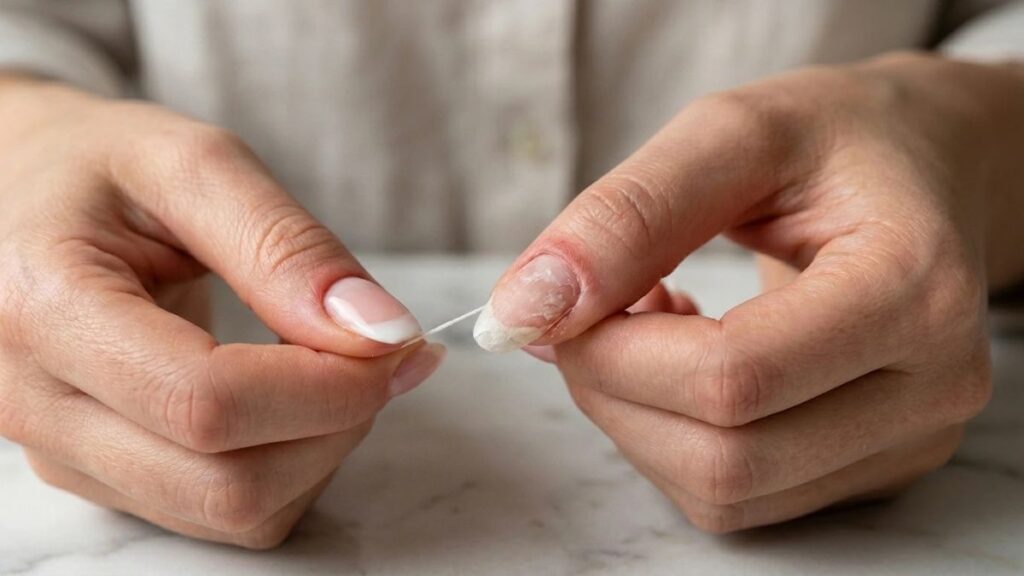
This method involves gently sliding dental floss under the lifted edge of the acrylic nail. It works best when nails are already slightly loosened.
Pros and Cons of Removing Acrylic Nails Without Acetone
| Pros | Cons |
| No harsh chemical exposure | Takes longer time |
| Reduces nail damage | Requires patience |
| Good for sensitive skin | Not always effective on strong glue |
| Natural nail hydration benefits | May need multiple attempts |
While chemical-free removal is safer, it requires consistency and patience.
Common Mistakes to Avoid
Many people damage their nails during removal because of rushed techniques. Avoid these mistakes:
- Pulling acrylic nails forcefully
- Skipping the soaking step
- Using sharp tools aggressively
- Not filing the top layer
- Removing nails when they are still firmly bonded
These mistakes can lead to thinning, cracks, and painful nail beds.
Best Practices for Healthy Nail Recovery
After you remove acrylic nails without acetone, your natural nails need care and hydration.
Nail Recovery Tips
- Apply cuticle oil daily
- Keep nails short for a few days
- Use strengthening nail serums
- Avoid new acrylics for at least 1–2 weeks
- Moisturize hands regularly
Taking care of your nails after removal is just as important as the removal process itself.
Extra Tips for Faster and Safer Removal
- Use slightly warm (not hot) water for soaking
- Add a few drops of lemon juice to help soften glue
- Gently wiggle nails instead of pulling
- Work one nail at a time for better control
- Be patient—rushing causes damage
Conclusion
Removing acrylic nails at home doesn’t have to involve harsh chemicals. With the right techniques, you can safely remove acrylic nails without acetone while protecting your natural nails.
The key is patience, gentle soaking, and proper nail care. When done correctly, your nails can stay healthy, strong, and ready for your next manicure without long-term damage.
Frequently Asked Questions
Yes, you can use warm water, oil soaks, and gentle lifting methods instead of acetone.
It usually takes 20 to 60 minutes depending on nail thickness and glue strength.
Yes, it is safer for natural nails but requires patience and gentle handling.
Coconut oil and olive oil work best due to their moisturizing and softening properties.
Moisturize your nails, use cuticle oil, and let your natural nails recover before applying new extensions.
/ You May Also Read /
Can You Apply Nail Polish on Gel? Everything You Need to Know
White Pink Nail Art: The Ultimate Guide to Soft, Stunning Designs